
Or more specifically why you’re struggling to lose body fat. Although scale weight is a useful measure for dieting progress, it can only take you so far before there are limitations. Before looking into some reasons why you’re struggling to lose body fat, here’s a quick recognition of why scale weight might not be dropping, yet you could still be losing fat:
What Induces Water Retention?
- Poor hydration
- Increased stress
- Increased carbohydrate intake
- Lack of sleep
- Increased recovery demand from training
- Poor digestion
- Menstrual cycle
Over time you still want to understand and control these variables as a way of reducing water retention and controlling weight fluctuations. It’s equally important to track these potential causes, so you can spot trends and start to make correlations between movements in weight and lifestyle factors. This promotes a rationalised reaction to scale weight movements, rather than emotional, encouraging you to keep pushing forward on your journey regardless of the number.
Now let’s look into some reasons why you aren’t losing body fat:
Your Diet Doesn’t Even Attempt to Reduce Calories
When it comes to choosing a diet that works for you, there is a specific principle that it needs to abide by, regardless of the carbohydrate or fat composition. Creating a calorie deficit is that principle. This means that there are a number of methods under this principle that can be followed with success; from fasting 16 hours per day, to reducing carbohydrates.
The issue therefore, stems from following a particular diet that doesn’t address this key component, for example removing a specific food group from your diet, but then replacing the removed calories with an increased consumption of another food (essentially keeping calories the same!).
That’s not to say that you NEED to track calories, many can successfully diet without tracking, but only when there is a basic understanding of calories, nutrition and portion sizes.
Overestimated Energy Expenditure
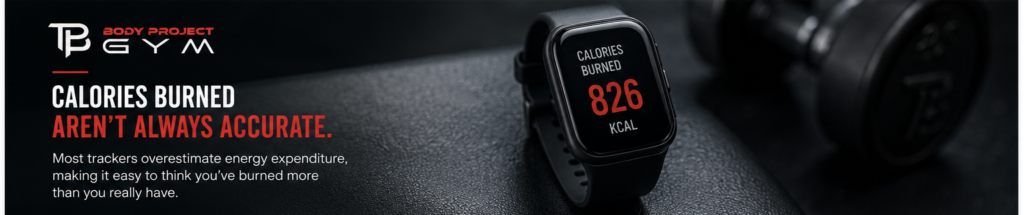
Cardio, resistance training, circuits and intervals are all tools we’ve used in the past when looking to drop body fat. Those of you that have worn fitness trackers, know the feeling of satisfaction when looking down at your watch after a gruelling hour of hard work and see that you’ve burnt 1000 calories, ensuring that tomorrow’s takeaway won’t impact your fat loss results.
We’re sorry to tell you that you’ve been lied to. Unfortunately, unless you’re using high-grade research equipment (which still isn’t necessarily 100% accurate), the majority of trackers have been shown to overestimate energy expenditure quite substantially. Add to this that most of the population are prone to overestimating their total physical activity levels from non-exercise activity (walking), and you can see how easy it can be to be outputting 300-400 less calories than once thought.
This doesn’t mean that exercise is not a useful tool, we still implement various exercise regimes with our clients’ programmes, but we suggest that you keep the exercise measurable, progressive and not as a method of expending energy. If you take anything away from this, stop tracking calories burnt!
Non-Adherence
One of our favourite quotes at BPGym is; losing weight is as simple as creating a calorie deficit, yet creating a calorie deficit isn’t always simple. When looking at areas to prioritise in any journey, adherence is always going to be the foundation that governs everything else. Without adherence, you will lack consistency and the ability to keep moving in the right direction.
This is where finding the correct information and education around nutrition is vital to sustaining long term results, regardless of what the goal is. Each nutritional plan should be different to each individual, as we all have different palates, preferences and histories with food. Having an understanding of what’s in the food you eat, how many calories to consume, and the impact it’ll have on your body will lead to you being able to devise a nutritional plan that works for you, thereby making it easier to adhere to.
If this is something you struggle with, here are some key considerations we have when writing a client’s diet:
- Social allowances
- Minimising hunger
- Personal food preferences
- Fits with lifestyle
- Easy to stick to
- Achieves results
If you’re ticking all of these boxes, whilst still creating a calorie deficit, then you’re on track to achieving a long-lasting transformation that even we at BPGym would be proud of.